
Ebo Taylor: Sonic Architect of a Continent
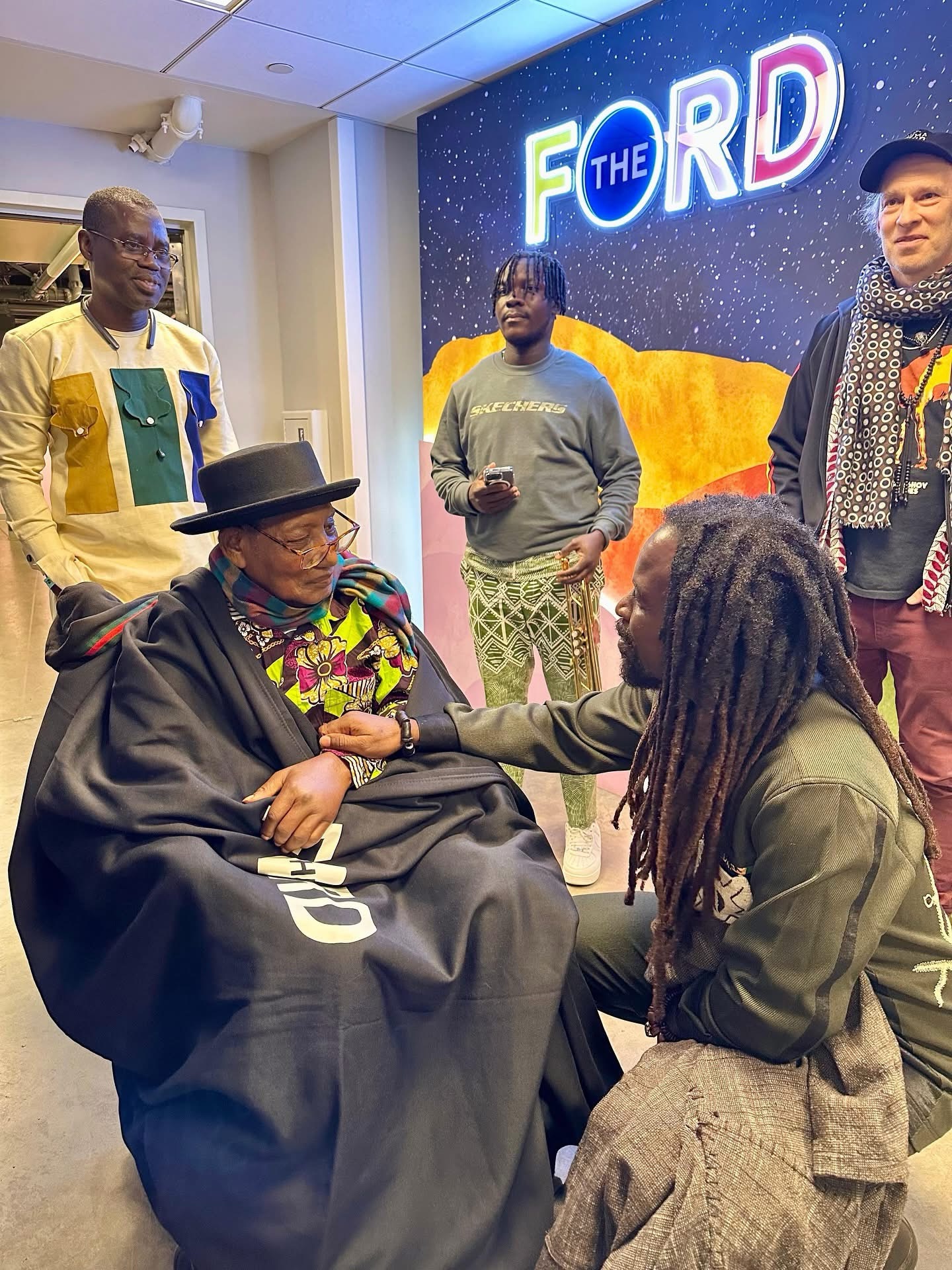 Ebo Taylor with multiple grammy-nominated Ghanaian artiste, Rocky Dawuni. Picture courtesy: Rocky Dawuni Facebook page.
Ebo Taylor, one of the most influential architects of modern West African music, has died. He was one of the most consequential figures in modern African music. He was 90.
Ebo Taylor was central to the development of a musical language that reshaped the sound of the continent and later the world. Long before Afrobeat became a global shorthand for political defiance, he had helped give it structure, discipline, and musical intelligence, drawing deeply from Ghanaian highlife, American jazz, and funk.
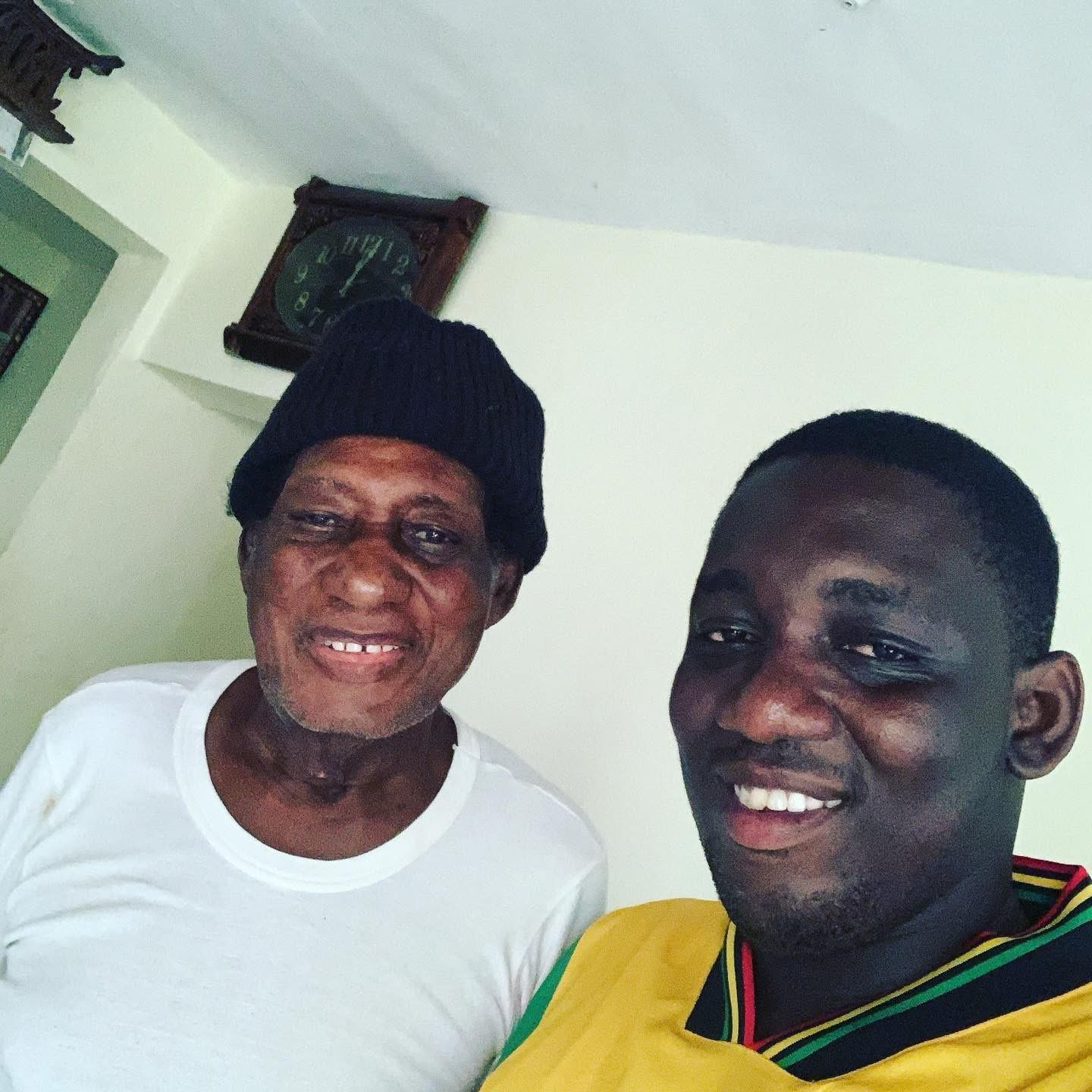 Picture taken in August 2021. Ebo Taylor with the author at his residence
We spoke about West African music, about Ghana and Nigeria, about movement and memory. And inevitably, we spoke about Fela Kuti. Ebo Taylor did not narrate those years with nostalgia or self-mythology. He spoke of friendship, of listening, of the seriousness with which they approached sound, of curiosity, of sound traveling across borders before borders hardened into claims of ownership. He spoke like a man who understood that music, at its most serious, is always communal. Music, he seemed to believe, was never owned. It was passed on.
Ebo Taylor was one of the great architects of modern African music, though he rarely received the attention given to its louder revolutionaries. Long before Afrobeat became a global shorthand for defiance and groove, Ebo Taylor was shaping its musical grammar. Drawing from Ghanaian highlife, American jazz, funk, and the disciplined swing of big-band arrangements, he helped forge a sound that was both supple and insistent. Afrobeat did not emerge fully formed from outrage alone. It emerged from structure. Ebo Taylor understood structure. If Afrobeat became the sound of political insistence in West Africa, Ebo Taylor helped give it its bones. Long before the genre found its global vocabulary of rebellion, he had already mastered the disciplines that made rebellion sustainable: arrangement, restraint, repetition, clarity.
Born in 1936, Ebo Taylor came of age alongside Ghana itself, at a moment when highlife was more than entertainment. It was civic sound, urban philosophy, the music of aspiration. Ebo Taylor absorbed its elegance, then pressed against its limits. He brought to it the harmonic intelligence of jazz, the muscularity of funk, and an arranger’s ear for tension. His compositions refused excess. Every horn line had purpose. Every rhythm carried argument. As a bandleader, arranger, and composer, he insisted on precision. The horns spoke clearly. The rhythm section held its ground. Nothing was ornamental. Everything mattered.
It was this seriousness that shaped his influence on Fela Kuti. His influence on Fela Kuti was not incidental. When Fela began forging what would become Afrobeat, he did so with Ebo Taylor’s musical discipline as a guide. The extended forms, the precision of the horn sections, the refusal to let groove collapse into chaos all bore the imprint of Taylor’s thinking. Afrobeat’s power was not only in its anger, but in its structure. Ebo Taylor understood that politics without form did not last. Afrobeat’s militancy was inseparable from its musical intelligence.
Yet Ebo Taylor never sought to dominate the narrative. He never claimed ownership over what followed. He remained, even late in life, more interested in conversation than in canonization. When we spoke in 2021 about his legacy, he deflected the word gently. What mattered to him was continuity: that younger musicians understood where the music came from, and why. That they heard highlife not as nostalgia, but as a living foundation.
Ebo Taylor belonged to a generation of Ghanaian musicians who believed that influence worked best when it was indirect. He did not demand credit. He allowed sound to travel. In doing so, he helped position Ghana not as a peripheral influence, but as a central engine in the making of modern African music. Highlife was not a precursor to be outgrown. It was a foundation to be built upon.
In his later years, as international audiences rediscovered his work and critics increasingly recognized his role, Ebo Taylor accepted attention with grace but without revisionism. He spoke less about legacy than about continuity. When I asked him in 2021 what mattered most to him now, he returned to younger musicians, to whether they understood where the music came from, and why it had to be made carefully. He spoke of his desire to work with Shatta Wale and Sarkordie. I don’t know what became of that but I never followed up on that with him.
That care defined his life. His music was political without being strident, joyful without being careless. It assumed intelligence in its listeners. It asked for patience. It did not rush toward applause.
To listen closely to Afrobeat today is to hear Ghana inside it. To listen closely to highlife is to hear Ebo Taylor’s discipline, his moral seriousness, his refusal of excess, his insistence that beauty and seriousness are not opposites. His work reminds us that African music did not arrive on the world stage as spectacle, but as thought.
When I left his home that August afternoon, I felt I had encountered not only a musician, but a custodian. Ebo Taylor shaped history by standing slightly to the side of it, trusting that what mattered would endure.
West African music is broader, deeper, and more coherent because he lived.